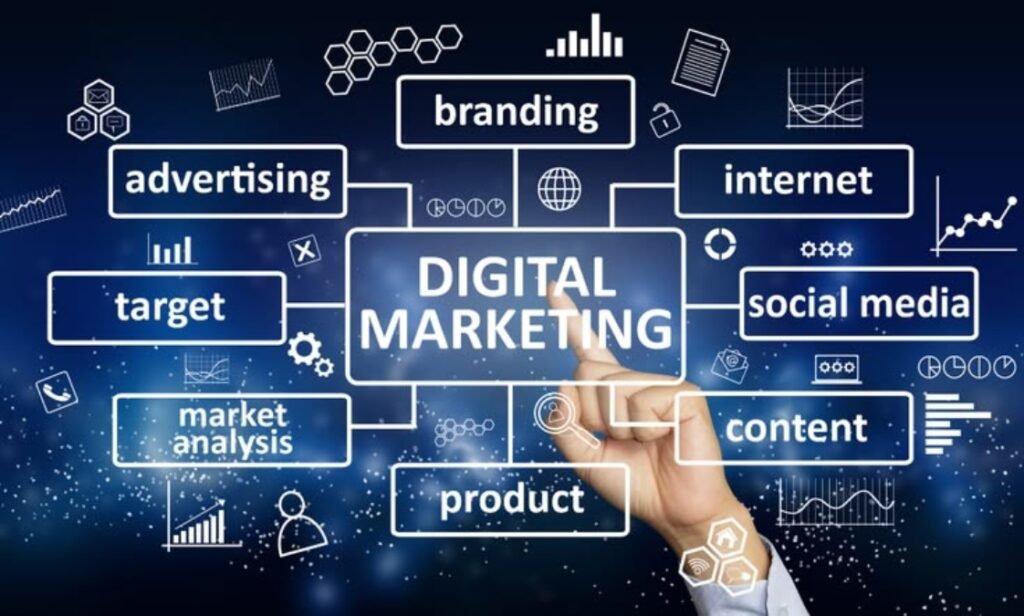
Strategy before content is the principle that separates random marketing activity from measurable business growth. In today’s digital world, brands are creating more content than ever before, but more content does not automatically create better results.
Many businesses publish social posts, blogs, videos, ads, and visuals without a clear direction. The content may look professional, but if it is not connected to business goals, audience needs, and a measurable customer journey, it often fails to generate real impact.
At Sonic Marketing, strategy before content is not just an idea. It is the foundation of how campaigns are planned, executed, measured, and optimized for growth.
To explore performance-focused marketing solutions, visit
Sonic Marketing
.
Strategy Before Content Creates Marketing Clarity
Strategy before content helps brands define why content exists before deciding what to publish.
Before creating any post, article, ad, or campaign asset, a clear strategy should define:
- The business objective
- The target audience
- The customer problem
- The core message
- The desired action
- The success metric
Without this clarity, content becomes noise. With strategy, content becomes a focused tool designed to support growth.
Marketing Strategy First Prevents Random Content
Marketing strategy first means that brands should not start with the question, “What should we post today?” They should start with, “What business outcome are we trying to create?”
Random content often leads to:
- Inconsistent messaging
- Weak audience connection
- Unclear campaign goals
- Wasted creative effort
- Low conversion impact
When strategy comes first, every content decision becomes more intentional, structured, and measurable.
Strategy-Led Content Planning Defines the Right Audience
Strategy-led content planning ensures that brands understand who they are speaking to before creating content.
Strong audience strategy identifies:
- Customer pain points
- Decision-making behavior
- Buying motivations
- Objections and trust barriers
- Preferred content formats
When the audience is clear, content becomes more relevant. It speaks to real problems, not general assumptions.
Content Driven by Strategy Supports the Customer Journey
Content driven by strategy is built around the full customer journey rather than isolated posts.
At Sonic Marketing, content is planned to support key stages such as:
- Awareness
- Education
- Trust building
- Lead capture
- Conversion
- Follow-up
This approach helps potential customers move from attention to action. Content becomes part of a system, not a disconnected activity.
A Strategy-First Content Approach Improves Campaign Execution
A strategy-first content approach makes execution faster and more disciplined because teams already know the goal, audience, message, and direction.
Clear strategy improves execution by creating:
- Better campaign briefs
- Stronger creative direction
- Faster approval workflows
- More consistent messaging
- Clearer performance expectations
When teams know the purpose behind the content, execution becomes more focused and efficient.
Growth-Focused Marketing Strategy Uses Data
Growth-focused marketing strategy depends on data, not assumptions. Data helps brands understand what audiences respond to, which messages convert, and which campaigns deserve more investment.
Important data points include:
- Website behavior
- Engagement quality
- Lead conversion rates
- Cost per lead
- Campaign ROI
- Customer journey performance
At Sonic Marketing, data strengthens strategy before content is scaled. This protects brands from producing more content without knowing what actually works.
Strategy Before Content Turns Content Into a Growth Tool
Strategy before content changes the role of content. Instead of being only a visibility asset, content becomes a business growth tool.
Strategic content can help brands:
- Build authority
- Educate prospects
- Generate qualified leads
- Support sales conversations
- Improve conversions
- Strengthen long-term positioning
This is why content should never be created only to fill a calendar. It should support a measurable business objective.
Content Marketing Strategy Builds Scalable Systems
Content marketing strategy helps brands build repeatable systems instead of relying on one-off ideas.
A scalable content system may include:
- Monthly content themes
- SEO article planning
- Social media content pillars
- Lead generation assets
- Email follow-up sequences
- Performance review cycles
With this structure, content becomes easier to produce, measure, improve, and scale.
Strategic Content Planning Reduces Wasted Budget
Strategic content planning reduces wasted budget because it prevents brands from investing in content that has no clear role in the growth journey.
Without strategy, brands may spend money on content that attracts attention but does not create action. With strategy, content is planned around business goals, conversion paths, and measurable outcomes.
This improves efficiency and helps brands invest in the content formats, channels, and messages most likely to drive results.
The Sonic Marketing Approach
At Sonic Marketing, strategy comes before execution. Before creating content, the team defines the business objective, target audience, offer, customer journey, and performance metrics.
The approach focuses on:
- Clear business goals
- Audience and market understanding
- Strategic messaging
- Content mapped to the customer journey
- Data-driven optimization
- Measurable growth outcomes
This disciplined process helps brands turn content from noise into a system that supports visibility, trust, leads, and business growth.
Industry Insights and External Resources
According to
HubSpot
, effective marketing strategy depends on clear goals, audience understanding, and consistent execution.
Research from
McKinsey & Company
highlights the importance of data, customer insight, performance measurement, and disciplined execution in modern growth marketing.
Frequently Asked Questions (FAQ)
-
Why should strategy come before content?
Strategy should come before content because it defines the audience, message, purpose, business goal, and measurable outcome behind every piece of content. -
What happens when content is created without strategy?
Content without strategy often creates inconsistent messaging, wasted resources, weak conversions, and limited business impact. -
What is a strategy-first marketing approach?
A strategy-first marketing approach defines business goals, audience insights, positioning, and performance metrics before content execution begins. -
How does strategy improve content performance?
Strategy improves content performance by aligning content with customer needs, funnel stages, conversion goals, and measurable business outcomes. -
How does Sonic Marketing approach content strategy?
Sonic Marketing builds data-driven strategy first, then creates content designed to support each stage of the customer journey and drive measurable growth.
Strategy before content is the foundation of effective modern marketing.
Content alone does not create growth. Content becomes powerful when it is connected to a clear strategy, audience insight, data, execution systems, and measurable goals.
Brands that lead with strategy create content with purpose, direction, and performance potential.
👉 At Sonic Marketing, we build strategy first so every piece of content supports clarity, trust, conversions, and measurable business growth.
📩 Contact our team today and discover how strategy-led content can support your next stage of growth.