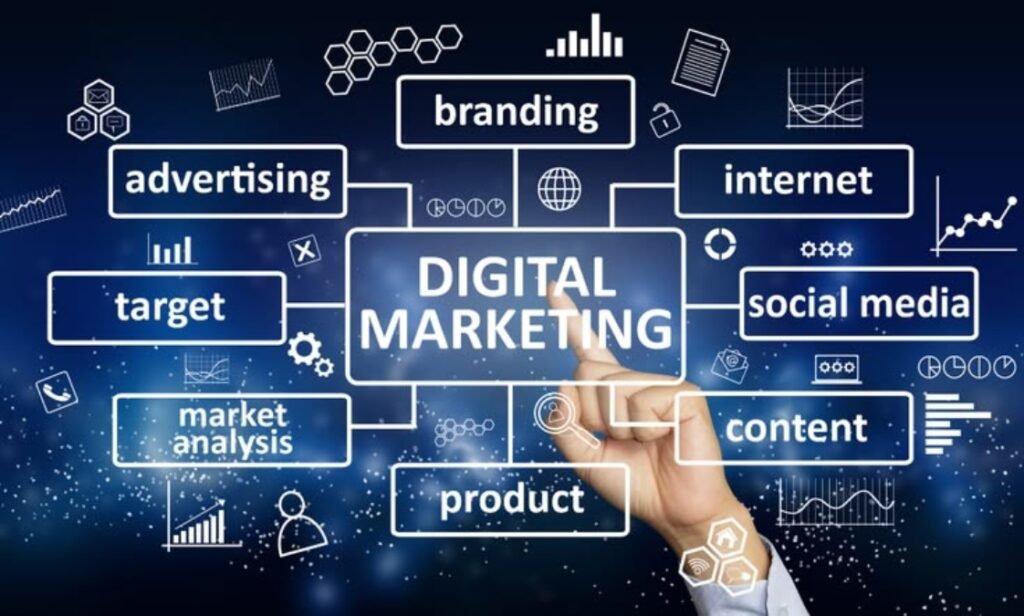
Data-driven marketing decisions are the foundation of scalable growth in modern business. As brands grow, marketing becomes more complex, more competitive, and more expensive. What works at a small scale often fails when expanded without structure, tracking, and clear performance insight.
Many companies try to scale by increasing activity. They launch more campaigns, publish more content, invest in more channels, and increase advertising budgets. But growth does not come from doing more alone. It comes from making better decisions.
Data transforms marketing from random experimentation into a predictable, repeatable, and measurable growth system.
At Sonic Marketing, data is not treated as an afterthought. It is used to guide strategy, execution, optimization, and scaling decisions from the beginning.
To explore performance-focused marketing solutions, visit
Sonic Marketing
.
Data-Driven Marketing Decisions Create Scalable Growth
Data-driven marketing decisions help brands understand what should be scaled, what should be improved, and what should be stopped.
Scaling marketing without data often leads to higher costs and lower efficiency. Instead of multiplying success, brands may multiply mistakes.
Data helps businesses:
- Identify high-performing campaigns
- Understand customer behavior
- Improve conversion paths
- Reduce wasted budget
- Scale only what is proven to work
This makes growth more controlled, measurable, and sustainable.
The Role of Data in Marketing Strategy
The role of data in marketing is to replace guesswork with clarity. Intuition may help brands start, but data helps them scale with confidence.
Data provides insight into:
- Audience behavior
- Campaign performance
- Conversion patterns
- Channel effectiveness
- Customer journey gaps
When teams use data correctly, decisions become more consistent, repeatable, and aligned with business goals.
Marketing Analytics Strategy Replaces Guesswork
Marketing analytics strategy allows brands to evaluate performance using real evidence instead of assumptions.
Without analytics, teams may continue investing in content, ads, or channels that look active but fail to generate meaningful results.
A strong analytics strategy tracks:
- Where leads come from
- Which campaigns convert best
- Which messages create action
- Which channels waste budget
- Which audiences deliver stronger ROI
This helps brands focus resources on the actions that support real growth.
Data-Driven Marketing Decisions Identify What Can Scale
Data-driven marketing decisions are essential because not everything that performs once is ready to scale.
Some campaigns generate attention but not leads. Some channels create traffic but not conversions. Some messages attract engagement but not revenue.
Before scaling, brands should evaluate:
- Cost per acquisition
- Conversion rate
- Lead quality
- Customer lifetime value
- Return on investment
These metrics reveal whether a campaign has the potential to grow efficiently or needs more optimization first.
Scalable Marketing Decisions Depend on the Right Metrics
Scalable marketing decisions require focusing on metrics that connect marketing activity to business performance.
Vanity metrics such as views, likes, reach, and general engagement can be useful for awareness, but they do not guarantee growth.
More important metrics include:
- Conversion rate
- Cost per lead
- Cost per acquisition
- Sales-qualified leads
- Customer lifetime value
- Marketing ROI
These numbers help brands understand whether marketing is creating measurable business value.
Data-Driven Growth Marketing Improves Optimization Speed
Data-driven growth marketing helps brands learn faster and improve campaigns continuously.
Speed matters because markets change quickly. Audience behavior shifts, platform algorithms evolve, and competitors adjust their campaigns constantly.
Data allows brands to:
- Test faster
- Learn quicker
- Optimize continuously
- Adjust messaging based on performance
- Scale winning campaigns sooner
Data-driven marketing decisions shorten feedback loops and help teams move from assumption to improvement faster.
Data Builds Better Marketing Systems
Scalable marketing is built through systems, not isolated campaigns. Data shows where those systems are working and where they need improvement.
Marketing systems may include:
- Lead generation funnels
- Landing page structures
- Email follow-up sequences
- CRM workflows
- Automation systems
- Reporting dashboards
Data identifies bottlenecks, missed opportunities, weak conversion points, and performance gaps. This helps brands improve the full journey instead of only adjusting individual campaigns.
Data-Driven Marketing Decisions Create Team Accountability
Data-driven marketing decisions create alignment across marketing, sales, operations, and leadership.
When performance is measurable, teams can clearly understand what is working, where improvement is needed, and which actions support business goals.
This creates accountability through:
- Clear goals
- Shared performance metrics
- Transparent reporting
- Better team alignment
- Faster decision-making
Instead of debating opinions, teams can evaluate performance based on real results.
Scaling Without Data Increases Risk
Scaling without data is one of the most common reasons marketing budgets become inefficient.
Without clear insights:
- Costs increase
- Performance becomes harder to predict
- Weak campaigns receive more budget
- Customer journey problems remain hidden
- Teams make decisions based on assumptions
Growth becomes risky when brands increase spend without knowing what is actually driving results.
Data-driven marketing decisions reduce this risk by ensuring that scaling happens only when performance indicators support it.
The Sonic Marketing Data-First Approach
At Sonic Marketing, data is used to build smarter marketing systems from the start.
The approach focuses on:
- Strategy built on real insights
- Execution guided by performance
- Campaigns measured through clear metrics
- Optimization based on live data
- Scaling only when results are proven
This helps brands grow with clarity, confidence, and measurable efficiency instead of relying on guesswork campaigns.
Industry Insights and External Resources
According to
HubSpot
, marketing analytics helps businesses measure performance, understand customer behavior, and improve marketing decisions.
Research from
McKinsey & Company
highlights the importance of data, customer insight, performance measurement, and continuous optimization in growth marketing.
Frequently Asked Questions (FAQ)
-
Why are data-driven marketing decisions important?
Data-driven marketing decisions are important because they help brands reduce guesswork, improve performance, control costs, and scale campaigns with greater confidence. -
What is the role of data in marketing?
The role of data in marketing is to show how audiences behave, which campaigns perform best, and where improvements are needed. -
Which metrics matter most for scalable marketing?
Important metrics include conversion rate, cost per lead, cost per acquisition, customer lifetime value, lead quality, and marketing ROI. -
Can marketing scale without data?
Marketing can grow without data, but it usually becomes inefficient, risky, and difficult to optimize sustainably. -
How does Sonic Marketing use data to improve results?
Sonic Marketing uses data to guide strategy, track campaign performance, identify optimization opportunities, and scale only what is proven to work.
Data-driven marketing decisions allow brands to scale with clarity instead of guesswork.
Modern marketing growth does not come from more activity alone. It comes from better insight, stronger systems, accurate metrics, and continuous optimization.
When data guides strategy and execution, brands can identify what works, improve what matters, and scale with greater confidence.
👉 At Sonic Marketing, we build data-driven growth systems — not guesswork campaigns.
📩 Contact our team today and discover how a data-first marketing engine can help your business scale smarter.