Marketing systems vs campaigns is one of the most important differences modern brands must understand if they want consistent growth. Many businesses still treat marketing as a series of disconnected campaigns. They launch ads, publish content, run promotions, and wait for short-term results.
Campaigns can create attention, but attention alone does not build a reliable growth engine. High-performing brands know that sustainable growth comes from structure, consistency, automation, tracking, and continuous optimization.
Instead of asking, “What campaign should we launch next?” successful brands ask, “What system are we building to generate, nurture, and convert demand over time?”
To explore performance-focused marketing solutions, visit
Sonic Marketing
.
Understanding Marketing Systems vs Campaigns
Marketing systems vs campaigns is not about choosing one and ignoring the other. Campaigns still matter, but they become more effective when they operate inside a larger system.
A campaign is usually temporary. It has a start date, an end date, a message, and a short-term objective. It may generate traffic, leads, engagement, or awareness for a limited period.
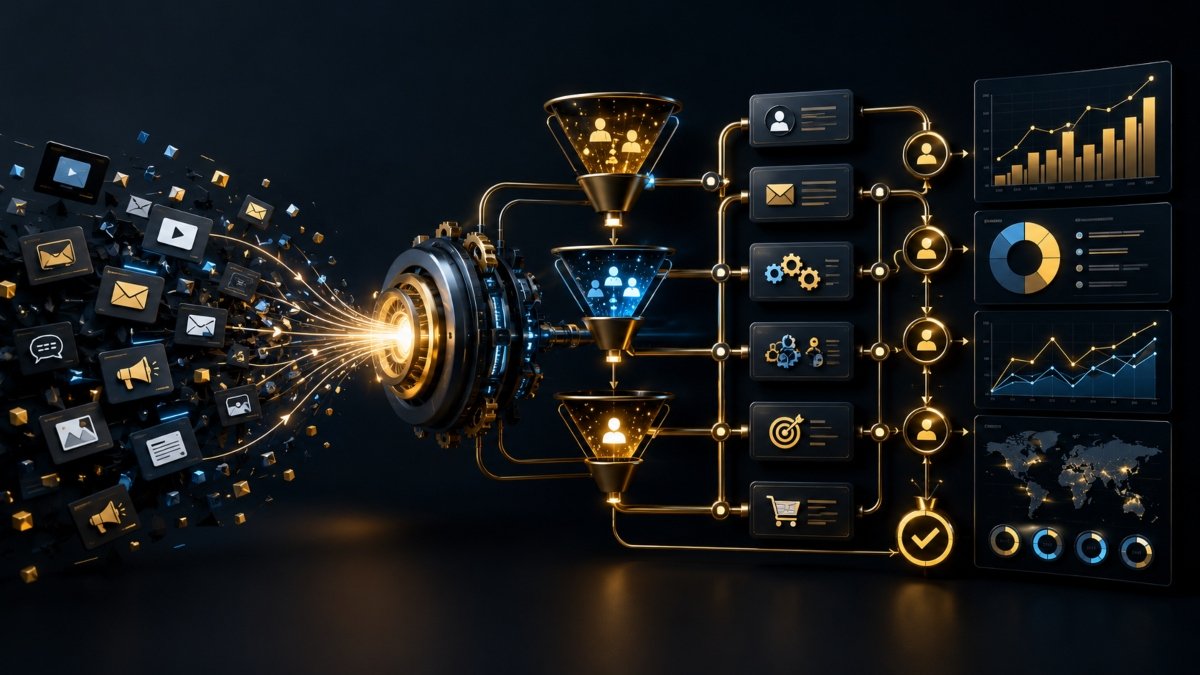
A marketing system is different. It connects strategy, audience targeting, content, funnels, automation, CRM follow-up, performance tracking, and optimization into one repeatable process.
When campaigns are disconnected, results often fade quickly. When campaigns support a system, every action contributes to long-term growth.
Campaigns Create Spikes, Systems Create Stability
One-off campaigns often create temporary spikes in traffic or engagement. A brand may see more visitors, more clicks, or more inquiries for a short time. However, if there is no follow-up structure, most of that attention disappears.
This is why campaign-based marketing can feel active but unstable. Every time results slow down, the brand has to start again with a new idea, new campaign, and new budget.
Systems create stability because they continue working beyond a single campaign. A strong system captures attention, converts visitors, nurtures leads, follows up with prospects, and tracks what happens next.
That structure helps brands build momentum instead of depending on occasional wins.
Marketing Systems vs Campaigns Matters for Growth
The real value of marketing systems vs campaigns becomes clear when a brand wants predictable growth. A campaign may bring a temporary result, but a system creates a repeatable path from awareness to conversion.
A strong marketing system may include:
- Clear audience strategy
- Consistent brand messaging
- Landing pages
- Lead generation funnels
- Email or WhatsApp follow-up
- CRM tracking
- Retargeting campaigns
- Performance dashboards
- Optimization cycles
When these elements work together, marketing becomes easier to measure, improve, and scale.
Scalable Marketing Systems Support Long-Term Performance
Scalable marketing systems help brands grow without rebuilding everything from zero every time they want results. A scalable system gives the team a structured process that can be repeated and improved.
This matters because growth becomes difficult when every campaign is treated as a new experiment with no connection to previous learning.
Scalable systems help brands understand:
- Which audiences respond best
- Which messages convert stronger
- Which channels produce better leads
- Where prospects drop off
- Which campaigns deserve more budget
- What should be optimized next
Instead of relying on guesswork, brands can scale what already works and improve what does not.
Sustainable Brand Growth Strategy Needs Consistency
A strong sustainable brand growth strategy depends on consistency. Customers rarely make decisions after one interaction. They need repeated exposure, trust, clarity, and a clear reason to take action.
Disconnected campaigns often reset momentum. One campaign says one thing, another campaign says something different, and the customer journey becomes unclear.
Systems protect consistency by aligning content, ads, landing pages, follow-up messages, and sales communication around the same growth objective.
This helps audiences understand the brand faster and trust the offer more easily.
Marketing Automation and Funnels Improve Efficiency
Marketing automation and funnels make systems more powerful because they reduce manual effort and improve follow-up speed.
A funnel guides potential customers through a structured journey. Automation helps maintain communication without depending on manual reminders every time.
Automation can support:
- Lead nurturing
- Email follow-up
- CRM updates
- Retargeting audiences
- Lead segmentation
- Reporting workflows
Automation does not replace strategy. Instead, it helps execute the strategy with more consistency, speed, and control.
Performance-Driven Marketing Strategy Uses Data
A performance-driven marketing strategy depends on measurement. One of the biggest advantages of marketing systems is that they generate continuous data.
When the system is tracked properly, brands can see how each stage performs. They can measure traffic quality, landing page conversions, lead quality, follow-up performance, sales opportunities, and return on investment.
This creates better decision-making because teams are no longer relying only on opinions or surface-level metrics.
Data helps brands improve weak points, scale strong channels, and reduce wasted budget.
Marketing Systems vs Campaigns and Predictable Growth
When brands understand marketing systems vs campaigns, growth becomes more predictable. This does not mean every result is guaranteed, but it does mean the brand has more control over the process.
Predictable growth comes from repeatable actions, measurable steps, and continuous improvement.
For example, if a brand knows which audience converts, which landing page works, which follow-up sequence improves response, and which channel produces qualified leads, it can make smarter decisions with less risk.
This is how marketing becomes a growth engine instead of a guessing game.
Why High-Performing Brands Choose Systems
High-performing brands choose systems because systems create clarity, control, and accountability.
They know that marketing success should not depend only on one campaign, one ad, one trend, or one creative idea. Instead, success should come from a structured process that improves over time.
Systems help brands:
- Build consistent demand
- Improve conversion rates
- Reduce wasted budget
- Strengthen customer journeys
- Support sales teams
- Measure real performance
- Scale with confidence
Campaigns can still play an important role, but they should feed the system, not replace it.
The Sonic Marketing System-First Approach
At Sonic Marketing, marketing is designed as an integrated growth structure rather than a set of disconnected activities.
The approach focuses on clear strategy, audience understanding, funnel planning, fast execution, data tracking, and ongoing optimization. This allows brands to move beyond short-term campaign thinking and build stronger long-term performance.
A system-first approach helps brands turn marketing activity into measurable business progress.
Industry Insights and External Resources
According to
HubSpot
, effective marketing strategy depends on clear goals, audience understanding, planning, execution, and measurement.
Research from
McKinsey & Company
highlights the importance of data, customer insight, and performance improvement in modern growth marketing.
Frequently Asked Questions (FAQ)
-
What is the difference between marketing systems and campaigns?
Campaigns are temporary marketing efforts, while marketing systems are repeatable processes that connect strategy, funnels, automation, tracking, and optimization. -
Why do high-performing brands build marketing systems?
They build systems because systems create consistency, improve measurement, support scalability, and generate more predictable growth over time. -
Are campaigns still useful?
Yes. Campaigns are useful when they support a larger system. The problem is relying on isolated campaigns without follow-up, tracking, or optimization. -
How do marketing automation and funnels support growth?
They help brands capture leads, nurture prospects, improve follow-up, reduce manual effort, and guide customers toward conversion. -
How does Sonic Marketing build performance-driven systems?
Sonic Marketing connects strategy, content, funnels, automation, performance tracking, and optimization into a structured growth process.
Marketing systems vs campaigns is the difference between short-term activity and long-term growth. Campaigns may create attention, but systems create structure, consistency, and measurable performance.
High-performing brands do not stop at launching campaigns. They build processes that attract, nurture, convert, and improve continuously.
When marketing becomes a system, growth becomes more controlled, scalable, and sustainable.
👉 At Sonic Marketing, we help brands apply marketing systems vs campaigns thinking to build stronger, smarter, and more predictable growth engines.
📩 Contact our team today and discover how a system-first marketing approach can turn your campaigns into long-term business growth.